• Link to LinkedIn
  • Link to Facebook
  • Email Us
  • Email Us
  • Call Us
  • Call Us
NutriFusion
  • Applications
    • All Blends
    • Food
    • Beverages & Drinks
    • Nutraceuticals
    • Pet Nutrition
    • Custom Superfood
  • R&D
    • Research & Development
    • Vitamin Deficiency
  • Active Research
  • About
    • About NutriFusion®
    • Certifications
  • Contact
  • News
    • Press Center
  • Podcasts
  • Blog
  • Store
  • Store
  • Click to open the search input field Click to open the search input field Search
  • Menu Menu

Archive for category: Consumer Packaged Goods

Impossible Foods’ Plant Burger Not Impressing FDA So Far

in Consumer Packaged Goods, Food Business, Food Retail, Health & Nutrition

Reading Time: 3 minutes

The company, Impossible Foods, has been working on a plant-based burger that is touted to taste like real beef. According to Impossible Foods Inc. founder, Patrick O. Brown, the plant burger was invented to solve one of the most significant environmental problems on the planet– the production of beef. Made from soybean root and genetically engineered yeast, this burger was created to look, feel, and taste like a real burger without having to raise and kill a cow. The magic ingredient of the plant-based beef is heme–a source of iron that gives the red color to blood. But the company discovered a plant-based heme that offers the Impossible burger its beef taste and mouthfeel.

FDA Not Impressed by Impossible Plant Burger

While the Impossible burger is the most exciting discovery for vegans, vegetarians, and plant-based dieters, the US Food and Drug Administration was hardly impressed by it. The FDA even indicated in their report that the company has not yet met the mark. The discovery of the plant-based heme and using it in food production is something that needs more research on.

But according to Tom Neltner, chemicals policy director for the Environmental Defense Fund, the plant-based heme has many great potential uses. However, it is shrouded in a lot of controversies. Studies have shown that people who consume too much red meat are at risk of colon cancer. As heme makes the meat red, some researchers believe that heme may be the culprit. But with regards to plant-based heme, researchers still need further evidence to find the missing link. But Patrick Brown thinks otherwise. Reports on the possible connection of heme to cancer are rubbish, according to him.

Solution to Beef Addiction

Didn’t you know that 30% of the earth’s land is utilized in the production of beef? Cattle raising requires massive amounts of inputs like water. Brown developed the Impossible burger to tackle the environmental problems related to growing beef. Upon the introduction of the Impossible burger, investors have responded with a lot of enthusiasm. In fact, the company has raised more than $400 million. People who have invested in this product include Bill Gates and Vinod Khosla. Even big enterprises are also pitching in such as Singapore-based Temasek Holdings and Google Ventures.

Having said this, plant meat that tastes almost like real meat is one of the hottest food trends in the market today. It is not only famous among vegans and vegetarians but also flexitarians. In fact, the sales of plant-based meat are expected to grow by 17% annually according to CoBank.

Impossible Foods is Not Giving Up

While the FDA is hardly impressed by the plant burger, Impossible Foods is not giving up. In its recent attempt to satisfy the FDA, the company submitted a report that includes lab studies on rats being fed with large amounts of heme to prove that the plant-based heme is indeed safe for consumption. To date, the FDA is still currently reviewing the safety of the plant burger with heme.  But until proven otherwise, spokeswoman of Impossible Foods Inc., Rachel Conrad, noted that heme is safe to eat.

Inspired by www.bloomberg.com

https://nf.simplygrandproperties.com/wp-content/uploads/2022/05/NutriFusion-Logo-New-1030x251.png 0 0 NF Admin https://nf.simplygrandproperties.com/wp-content/uploads/2022/05/NutriFusion-Logo-New-1030x251.png NF Admin2018-05-14 08:14:582018-05-14 08:14:58Impossible Foods’ Plant Burger Not Impressing FDA So Far

Study: Consumers Favor the Term “Plant-Based” Over “Vegan”

in Consumer Packaged Goods, Food Business, Food Retail, Health & Nutrition, Supplements & Nutraceuticals

Reading Time: 3 minutes

The vegan movement is becoming popular as more people are trying to live healthy lives. Vegan food products do not contain any animal products (or by-products). In fact, around 800 companies worldwide have made vegan products and have partnered with organizations such as Vegan Action to market vegan food products.

But while veganism is considered a solid movement, another movement is coming to the forefront – the plant-based diet. While the two terms are often interchanged with one another, the latter has a broader definition ranging from excluding animal-based product to just adding more fresh produce to your diet.

Increasing Number of People Opting for the Plant-Based Diet

In a survey conducted by HealthFocus International, about 17% of consumers in the United States consume predominantly a plant-based diet while 60% say they are cutting back on meat-based products.  And those who are cutting back on meat reveal that they don’t plan to go back to their massive meat-eating habits and would want to make this flexitarian lifestyle permanent.

According to Steven Walton, General Manager of Research at HealthFocus International, the change in consumer preference with regards to consuming more produce is prevalent through a wide variety of demographics. This means that this diet is not only popular among millennials but even the baby boomers and generation Z. Industry leaders can benefit from this information, but they might be too distracted by the many words that have sprung up such as vegetarian, flexitarian, and vegan.

Vegan vs. Plant-Based in Consumer Minds

With this confusion, many consumers prefer a singular term when describing the diet. According to a California-based food consultant, Mattson, more than 80% of people surveyed indicated that they prefer the terms “plant-based” over “vegan” when describing a diet that avoids all types of animal products.

While the term “vegan” is often used, “plant-based” is more flexible and gives consumers the impression that the food tastes better and it more likened to whole foods. Mattson president, Barb Stuckey, noted that that the term “plant-based” is more positive and does not include deprivation or allegiance to a self-defining cause such as environmentalism or animal rights, which veganism is known for. By using the term “plant-based,” any conversation about plant-based food becomes neutral and does not incite any negative reactions from other people including ethical vegans.

Why are People Opting for a Plant-Based Diet?

There are many reasons why many people shift to the plant-based diet. Based on the survey, 3 out of 4 individuals noted that they would like to consume more plant-based foods for health reasons while others opt for this diet to lose weight or contribute something to the environment.

As more consumers are more welcoming to the term “plant-based,” food manufacturers have also caught up. Companies like Good Karma Food launched its non-dairy yogurt and sales have continued to increase 50% yearly. Other companies such as Beyond Meat introduced its plant-based chicken strips and burgers that vegan consumers have embraced with much gusto. Having said this, the popularity of the “plant-based” term has resulted in a new and ever-growing niche.

Inspired by www.fooddive.com

https://nf.simplygrandproperties.com/wp-content/uploads/2016/11/composition-of-fruits-and-vegetables-in-rainbow-82DUL49-min.webp 1067 1600 NF Admin https://nf.simplygrandproperties.com/wp-content/uploads/2022/05/NutriFusion-Logo-New-1030x251.png NF Admin2018-05-08 10:40:332018-05-08 10:40:33Study: Consumers Favor the Term “Plant-Based” Over “Vegan”

Study Warns Brands to Rethink Clean Label Products

in Beverages & Drinks, Consumer Packaged Goods, Food Business, Food Retail, Supplements & Nutraceuticals

Reading Time: 3 minutes

Clean label products are are the fastest growing market in the food and beverage industry. While this movement is trending, it leaves a lot of gray areas—not only for the food manufacturers but also for the retailers and consumers. Unfortunately, there is no single definition of the word “clean label” even if it has been around for a few years. This has led to a lot of confusion among many people.

A joint study from the Food Marketing Institute and Solutions for Retail Brands called “The Clean Label Phenomenon for Food Retailers: Enhancing Transparency for consumers” is aimed at determining what consumers think about clean labels.

The Definition of Clean Label

So, what are clean label products? The conventional definition indicates that products are made from natural ingredients devoid of artificial additives, preservatives, and flavoring. Other definitions also include food that comes with ultimate authenticity as well as trustworthiness. The thing is that clean label is often interchanged with the word “natural” that is way too far from the truth.  Currently, there is no legal definition of a clean label, and the lack of a precise definition and consistency makes it confusing for everyone.

If you are a follower of the clean label movement, it is crucial to know which foods come with clean labels and which ones do not. While it is apparent among consumers that preservative and additives are not included in the clean label food list, 65% of shoppers are still confused such that they tend to avoid ingredients like sugar and salt actively. People consider GMO foods not to be clean label products.

Problems Involving the Clean Label Movement

Aside from the vague definition of “clean label,” another issue involving this movement is transparency. While consumers want more straightforward ingredient lists, what they want more is greater transparency. Further, different generations of consumers also demand different qualities from clean label products. The differing needs from each generation of consumers also mean that they have differing views on different brand labels. For instance, consumers that prefer free-from-modifications products may view other traditional unaltered products unacceptable.

While there are some problems involved in the clean label movement, food manufacturers and retailers can address these issues by being transparent when it comes to how they interpret the word “clean label.” For some companies, they may view clean labels as non-GMO ingredients while some might focus on how the ingredients are processed.

How to Solve the Problems with Clean Label Products

In fact, European companies are more receptive towards the clean label movement. The food industry in the United States can learn from European companies. To date, only 27% of packaged foods are marketed with a clean label to which private brands make up the most substantial amount of sales. While the sales of products that are packaged as a clean label are still meager in the United States, it will eventually grow as more and more people become more aware and conscious of the foods that they are eating. Hopefully, in the future, clean label products will be better defined so we can all get behind eating better for you foods.

Inspired by www.fooddive.com

https://nf.simplygrandproperties.com/wp-content/uploads/2022/05/NutriFusion-Logo-New-1030x251.png 0 0 NF Admin https://nf.simplygrandproperties.com/wp-content/uploads/2022/05/NutriFusion-Logo-New-1030x251.png NF Admin2018-04-27 08:43:052018-04-27 08:43:05Study Warns Brands to Rethink Clean Label Products

Almost Half of Americans Are Willing to Try Cultured Meat

in Consumer Packaged Goods, Food Business, Food Retail

Reading Time: 3 minutes

In the hopes of supplementing the world’s supply of red meat, scientists have been culturing meat in the laboratory. Lab-grown meat is starting to trend as 40% of the American population welcome the idea of consuming it, according to the results of the survey conducted by the company Surveygoo. With the popularity of lab-grown meat, it may be the future of protein-packed food.

Lab-Grown Meat = Clean Meat

Lab-grown meat, also called clean meat, is now a buzzword in both the vegetarian and vegan communities. Vegans and vegetarians avoid eating meat due to the ethical treatment of animals and environmental sustainability. But since lab-grown meat is cultured inside the laboratory and is grown in a unique and sustainable means, 60% of the vegan respondents are willing to try cultured meat.

But what is cultured meat? Cultured meat is real meat grown from cells in laboratory settings. Unlike conventional beliefs, cultured meat cells are not sourced from animals.  When respondents were asked if they are still willing to eat this type of meat if available in meat shops, 20% of the respondents said yes while 38% declined. While the idea of cultured meat is widely accepted, many people are still hesitant to try it.

Why Does Cultured Meat Have a Lot of Potential?

Consumers are questioning their eating habits, and this includes eating meat. Flexitarians are wondering if the consumption of meat is good regarding their health, sustainability, and animal welfare.


The doubts surrounding meat consumption has led the cultured meat industry to address these doubts. One of the companies that are exploring this niche is Memphis Meats. It is currently working on cultured meat products that will be sold to high-end restaurants by 2021. The company produced a pound of cultured meat for less than $2,400 last year. Although the cost is still higher compared to conventional animal-sourced meats, experts are working on how to decrease the cost to make it more competitive.

Another company that is taking on with this niche market is Impossible Foods. The company has made plant-based proteins that actually “bleed” just like real red meat. The introduction of the bleeding plant-based burgers has left many people excited about this cultured meat. According to chief strategy officer Nick Halla, people are not tied to meat coming from animals. What they are most concerned about is that it tastes good regardless whether it came from animal or plant sources.

The Effect of Clean Meats

Consumption of cultured meat is gaining traction, and shortly, it is believed that more people will opt for it more than animal-sourced proteins. This will significantly affect traditional animal agriculture. In fact, the U.S. Cattlemen’s Association wants to exclude animal-free protein from the real definition of “meat.” While this campaign was successful in dairy alternatives, it may be challenging to impose such sanctions on plant-based meats. Nevertheless, there should be no competition between the two types of meats as both are equally popular and have their separate markets.

Inspired by www.fooddive.com

https://nf.simplygrandproperties.com/wp-content/uploads/2018/04/food-safety-P8KXX4H-min.jpg 1030 1543 NF Admin https://nf.simplygrandproperties.com/wp-content/uploads/2022/05/NutriFusion-Logo-New-1030x251.png NF Admin2018-04-26 07:37:152018-04-26 07:37:15Almost Half of Americans Are Willing to Try Cultured Meat

Innovative Premix Products for Infants to Grow By 2028

in Beverages & Drinks, Consumer Packaged Goods, Kid's Health

Reading Time: 3 minutes

New market research predicts increasing growth of nutritional food premixes for infants over the next ten years. With more parents wanting to feed their precious babies with only the best infant formula, companies have developed innovative nutritional premixes with nucleotides, organic ingredients, probiotics, and botanicals—aside from the usual ingredients like Vitamin D, DHA, ARA, and iron to name a few.

Infant formulas are food products that are intended to give the right nutrition to babies and infants. When it comes to infant nutrition, premixes play an essential role in formulas. Infant nutrition premixes are customized blends that are intended to improve the overall nutritional value of infant formula.

More Formula Consumption in Near Future

The trend of unique infant formula is growing in developed countries particularly in North America due to the increasing awareness associated with different blends of vitamins, minerals, amino acids, and other fortifications. In fact, North America shares a large regional market for nutritional premixes for infant formula, and it is forecasted that the value of the market will rise to $103 million by the end of 2028.

Powdered infant nutritional premixes are preferred because of their convenience compared to liquid infant mixes.  Aside from convenience, the contamination of powdered premixes is lesser compared with liquid premixes.

Which Ingredients Are Popular in Powdered Premixes for Infants?


There are different types of ingredients put into powdered nutritional premixes. But one of the most popular ingredients used is nucleotides. Nucleotides are added widely not only in infant nutrition but even in pharmaceutical nutrition industries.  Premixes containing amino acids such as threonine, lysine, and methionine to name a few are very popular as they are the primary amino acids needed by small children to grow well. Infant nutritional premixes are now becoming more functional as they are designed to help improve bone health, digestion, and immunity of infants.

Infant nutritional premixes are gaining traction and are now competing with the sports nutrition market as one of the industries that use nucleotides, vitamins, and other dietary supplements. Formula producers are looking for more natural premixes from fruits and vegetables to create more attractive packaging.

Key Players in The Market

The company Future Market Insights (FMI) released a report titled “Infant Nutritional Premix Market: Global Industry Analysis (2012-2017) and Opportunity Assessment (2018-2028)” which revealed that there are now a lot of critical players taking a bite of the infant nutritional premix niche. These include Plc, Glanbia, Royal DSM N.V., GmbH & Co, BASF, Watson-Inc., Hexagon Nutritional Pvt. Ltd., Farbest Brands, Vitablend, ADM company, and Jubilant Life Sciences to name a few.

The market for customized infant nutritional premix is becoming popular and is expected to get stronger as more and more people are looking for infant food products that contain more value than the usual conventional baby formula products.

Inspired by thefinancialconsulting.com

https://nf.simplygrandproperties.com/wp-content/uploads/2022/05/NutriFusion-Logo-New-1030x251.png 0 0 NF Admin https://nf.simplygrandproperties.com/wp-content/uploads/2022/05/NutriFusion-Logo-New-1030x251.png NF Admin2018-04-10 10:18:392018-04-10 10:18:39Innovative Premix Products for Infants to Grow By 2028

Scott Gottlieb’s FDA Will Continue to Push Food Transparency Measures

in Beverages & Drinks, Consumer Packaged Goods, Food Business, Food Retail, Health & Nutrition

Reading Time: 3 minutes

With the focus on deregulation by the Trump administration, many food industry experts worried that the newly appointed commissioner of the FDA, Scott Gottlieb, would roll back pending changes to nutrition labels and consumer information. However, at a recent conference, Gottlieb made it clear that the FDA is going to continue to push for food transparency with Nutrition Facts, labeling, and definitions playing a significant role in the agency’s new nutrition innovation strategy.

Improving the Health of Americans Through Food Transparency

At the National Food Policy Conference in Washington, D.C., Gottlieb let everyone know that the nutrition innovation strategy is meant to improve the health of all American regardless of socioeconomic status.

“Our challenge is to help create more healthful choices and foster inovation and competition, and also make these choices more afordable.” – Scott Gottlieb, FDA Commissioner

A study found that 20% of American deaths in 2015 could be attributed to poor dietary factors. Gottlieb made sure to emphasize the importance of research and facts on everything his agency does. He said that clear science-based information is the central pillar of the work we do at the FDA and is essential to helping drive better consumer choices.

Nutrition Facts Labeling Updates


Gottlieb indicated that the new Nutrition Facts labeling initiative is of the utmost importance, but he wants to make sure it is right. He wants to roll out the new label with a consumer educational campaign to help the average American better understand how many calories they should be consuming each day.

On top of the new label, he promised to handle the definition of “healthy” and “natural” for labeling. A core definition of “healthy” is critical to help consumers better understand what they are buying. The new definition will consider nutrient content. Consumers also want more clarity on “natural” which has never been defined by the NDA. While Gottlieb did not offer up much on this definition, he did indicate that it will need to be science-based.

Streamlining the Labeling Process for Food Manufacturers

Gottlieb believes the regulatory labeling process is currently too lengthy and time consuming for food manufacturers. He has added to his docked to streamline the labeling process to modern times. He wants it to be easy for consumers to understand the health benefits of a product.

He wants to make it easier for the food companies to clean up their labels. Interestingly, he used vitamins as an example since they typically appear by their chemical name on the ingredient statement. We believe it should stay this way as most of these vitamins do not come from whole food sources and are chemically derived. Our GrandFusion products concentrate these natural vitamins from fruits and vegetables and as a result, allow products to use a much cleaner ingredient statement.

Conclusion on Gottlieb’s Remarks

The FDA is overall in good hands with this Trump appointee. He is committed to pushing forward all of the Obama-era regulations and making decisions on scientific fact. He believes some of the processes in the FDA are archaic and need updating to work faster in today’s environment. It will be interesting to see all the changes that move forward under Scott Gottlieb’s leadership.

Inspired by www.fooddive.com

https://nf.simplygrandproperties.com/wp-content/uploads/2016/11/shallow-depth-of-field-image-of-nutrition-facts-PPCFXVQ-min.jpg 1030 1545 NF Admin https://nf.simplygrandproperties.com/wp-content/uploads/2022/05/NutriFusion-Logo-New-1030x251.png NF Admin2018-04-04 08:39:592018-04-04 08:39:59Scott Gottlieb’s FDA Will Continue to Push Food Transparency Measures

Infographic: Organic vs. Non-GMO – What’s the Difference?

in Beverages & Drinks, Consumer Packaged Goods, Food Business, Food Retail, Infographics, Supplements & Nutraceuticals

PacMoore recently released an interesting infographic on the differences between organic and non-GMO labels. Most consumers, as well as food brands, struggle to understand what is the difference. The certification and verification process is much different. Check out PacMoore’s infographic to learn more!

organic non-gmo what is difference certification verification

Inspired by https://www.pacmoore.com/organic-versus-non-gmo-labels/

https://nf.simplygrandproperties.com/wp-content/uploads/2022/05/NutriFusion-Logo-New-1030x251.png 0 0 NF Admin https://nf.simplygrandproperties.com/wp-content/uploads/2022/05/NutriFusion-Logo-New-1030x251.png NF Admin2018-03-07 08:46:382018-03-07 08:46:38Infographic: Organic vs. Non-GMO – What’s the Difference?

On-The-Go Habits Putting Pressure on Ingredient Manufacturers

in Beverages & Drinks, Consumer Packaged Goods, Food Business, Supplements & Nutraceuticals

Reading Time: 3 minutes

During the CAGNY conference in Florida, Food Dive sat down with ingredient manufacturer, Ingredion, to talk about insights into how CPG companies are planning for growth and adapting to changing consumer preferences. The CEO of Ingredion, Jim Zallie, believes that on-the-go consumption habits are the most challenging for the ingredient industry. The lucrative market opportunity is leading new players in the restaurant and retailer industry to compete with well-known CPG brands.

The Grab-and-Go is Stressing Ingredient Companies to Adapt

Jim Zallie told a consumer analyst group that the grab-and-go market, as well as food ordered online, has reached $110 billion globally. In just one year, from 2015 to 2016, the amount of U.S. on-the-go purchases grew by 56%. Zallie told the audience that this is critical to ingredient companies because of the importance of developing high-quality products that deliver the right texture and maintains heat.

Ingredion North American President, Jorgen Kokke says that texture claims on packaging have increased by over 90% in the past five years.

“We can talk about health trends… We can talk about cost and affordability and sustainability, but underneath all of that, [food] always has to taste good and be fun. And that’s where texture comes in. … We say it’s as important as flavor.”

Jorgen Kokke

Pockets of Growth in Functional On-The-Go Foods

Zallie believes there are “pockets of growth in the food anywhere space.” He points to the fresh refrigerated space as a critical example. The freshly prepared food category is generating over $25 billion in sales annually according to the Supermarket Guru. The clean label trend and simple ingredient trend play significant roles in the development of functional on-the-go foods. With 62% of consumers now looking for recognizable ingredients on the label, it’s imperative to use things they understand.

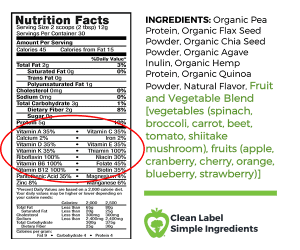
NutriFusion developed the GrandFusion product line for this very reason. We saw the way synthetic vitamins were reading on the label and thought there had to be a better way. With our products, consumers read fruits and vegetables instead of chemicals, so it makes a lot more sense to them. See the graphic below. If you are interested in learning more, visit our R&D page and download the GrandFusion resource kit to get started with product development.

supplements-ingredients-nutrition-panel-clean-label

https://nf.simplygrandproperties.com/wp-content/uploads/2018/03/healthy-food-ingredients-P9LTHGD-min.jpg 1030 1486 NF Admin https://nf.simplygrandproperties.com/wp-content/uploads/2022/05/NutriFusion-Logo-New-1030x251.png NF Admin2018-03-06 08:57:572018-03-06 08:57:57On-The-Go Habits Putting Pressure on Ingredient Manufacturers
Page 7 of 22«‹56789›»

NUTRIFUSION®

GrandFusion® is a blend of fruits and/or vegetables that can significantly increase the nutritional profile and, therefore, the marketability of food, beverage, pet, and snack products.

Categories

  • Animal Nutrition
  • Beverages & Drinks
  • Consumer Packaged Goods
  • Corporate Partnerships
  • Corporate Updates
  • Featured
  • Food Business
  • Food Retail
  • Health & Nutrition
  • Infographics
  • Kid's Health
  • News
  • Press Releases
  • Product Announcements
  • Recipes
  • Supplements & Nutraceuticals
  • Uncategorized

ABOUT NUTRIFUSION®

NutriFusion® provides the nutrient-rich benefits of fruits and vegetables in everyday food products through whole non-GMO foods to create its concentrated micronutrient and phytonutrient-rich food ingredient blends.

Search NutriFusion

Search Search

Archives

  • June 2026
  • May 2026
  • April 2026
  • February 2026
  • January 2026
  • December 2025
  • November 2025
  • October 2025
  • September 2025
  • August 2025
  • July 2025
  • June 2025
  • May 2025
  • April 2025
  • March 2025
  • February 2025
  • January 2025
  • December 2024
  • November 2024
  • October 2024
  • September 2024
  • August 2024
  • June 2024
  • May 2024
  • April 2024
  • March 2024
  • February 2024
  • January 2024
  • December 2023
  • November 2023
  • October 2023
  • September 2023
  • August 2023
  • July 2023
  • June 2023
  • May 2023
  • April 2023
  • March 2023
  • February 2023
  • January 2023
  • December 2022
  • November 2022
  • October 2022
  • September 2022
  • August 2022
  • July 2022
  • June 2022
  • May 2022
  • April 2022
  • March 2022
  • February 2022
  • January 2022
  • December 2021
  • November 2021
  • October 2021
  • September 2021
  • August 2021
  • July 2021
  • June 2021
  • April 2021
  • March 2021
  • February 2021
  • January 2021
  • December 2020
  • November 2020
  • October 2020
  • August 2020
  • June 2020
  • April 2020
  • March 2020
  • February 2020
  • January 2020
  • December 2019
  • November 2019
  • October 2019
  • September 2019
  • August 2019
  • July 2019
  • June 2019
  • May 2019
  • April 2019
  • March 2019
  • February 2019
  • January 2019
  • December 2018
  • November 2018
  • October 2018
  • September 2018
  • August 2018
  • July 2018
  • June 2018
  • May 2018
  • April 2018
  • March 2018
  • February 2018
  • January 2018
  • December 2017
  • November 2017
  • October 2017
  • September 2017
  • August 2017
  • July 2017
  • June 2017
  • May 2017
  • April 2017
  • March 2017
  • February 2017
  • January 2017
  • December 2016
  • November 2016
  • October 2016
  • September 2016
  • August 2016
  • July 2016
  • June 2016
  • May 2016
  • April 2016
  • March 2016
  • February 2016
  • January 2016
  • December 2015
  • November 2015
  • July 2015
  • March 2015
  • February 2015
  • January 2015

Categories

  • Animal Nutrition
  • Beverages & Drinks
  • Consumer Packaged Goods
  • Corporate Partnerships
  • Corporate Updates
  • Featured
  • Food Business
  • Food Retail
  • Health & Nutrition
  • Infographics
  • Kid's Health
  • News
  • Press Releases
  • Product Announcements
  • Recipes
  • Supplements & Nutraceuticals
  • Uncategorized

Pages

  • 12 Nutrient Fruit & Vegetable Blend | NF-2782
  • 2024 Tradeshows
  • 21 Vitamin & Mineral Blend | NF-82333
  • 6 Nutrient Fruit & Vegetable Blend | NF-2769
  • 6 Nutrient Fruit Blend | NF-2771
  • 6 Nutrient Vegetable Blend | NF-2770
  • About Us
  • Active Research
  • B Complex Vitamin Blend | NF-2131
  • Beverages & Drinks
  • Blog
  • Certifications
  • Clients
  • Connect with NutriFusion
  • Contact Us
  • Custom Superfood Powder Blends
  • EY US Unveils William Grand of NutriFusion as an Entrepreneur Of The Year® 2025 Florida Award Finalist
  • FAQ
  • Food
  • Hidden Benefits
  • Home
  • How Fruit & Vegetable Intake Affects Cardiovascular Health
  • Media Kit
  • Newsroom
  • Nutraceuticals
  • NutriFusion Announces Partnership with BeLoved Foods
  • NutriFusion Announces Partnership with Drink Todo
  • NutriFusion Announces Partnership with Jam Packd, Creator of Delicious, Nutritious Fruit Spreads
  • NutriFusion Announces Supplier Partnership with UMMY Kids Superfood Shakes
  • NutriFusion Honored as Bronze Stevie® Award Winner in 2025 American Business Awards®
  • NutriFusion Partners with Whole Dogg to Launch Canada’s First Veterinary Nutritionist formulated Dog Supplement
  • NutriFusion Ranks No. 3436 on the 2025 Inc. 5000 List of America’s Fastest-Growing Private Companies
  • NutriFusion Ranks No. 4441 on the 2024 Inc. 5000
  • NutriFusion Welcomes Nutrition Expert Michelle Bacarella, MS RDN, to Drive Innovation in Whole Food Nutrition Solutions
  • NutriFusion- nutrients created by nature
  • Pet Fruit & Vegetable Blends
  • Podcasts
  • Press
  • Privacy Policy
  • Privacy Tools
  • Products
  • Research & Development
  • Secure Website
  • Supplements & Nutraceuticals
  • SupplySide West
  • Test Page 2
  • Testimonials
  • The Essential Guide to Creating Functional Foods & Beverages
  • Vitamin Deficiency: What to Know
  • Vitamins for Baby Boomer & Seniors
  • Vitamins for Beverages
  • Vitamins for Frozen Foods
  • Vitamins for Healthy Snacks
  • Vitamins for Millennials
  • Vitamins for Pets
  • Vitamins for Private Label
  • Vitamins for Weight Management
  • Website Updates | Maintenance

Categories

  • Animal Nutrition
  • Beverages & Drinks
  • Consumer Packaged Goods
  • Corporate Partnerships
  • Corporate Updates
  • Featured
  • Food Business
  • Food Retail
  • Health & Nutrition
  • Infographics
  • Kid's Health
  • News
  • Press Releases
  • Product Announcements
  • Recipes
  • Supplements & Nutraceuticals
  • Uncategorized
Scroll to top Scroll to top Scroll to top