
• Link to LinkedIn
  • Link to Facebook
  • Email Us
  • Email Us
  • Call Us
  • Call Us
NutriFusion
  • Applications
    • All Blends
    • Food
    • Beverages & Drinks
    • Nutraceuticals
    • Pet Nutrition
    • Custom Superfood
  • R&D
    • Research & Development
    • Vitamin Deficiency
  • Active Research
  • About
    • About NutriFusion®
    • Certifications
  • Contact
  • News
    • Press Center
  • Podcasts
  • Blog
  • Store
  • Store
  • Click to open the search input field Click to open the search input field Search
  • Menu Menu

Archive for category: Health & Nutrition

Sugar – It’s a Sticky Situation

in Beverages & Drinks, Consumer Packaged Goods, Health & Nutrition, Kid's Health

Sugar.

Parents don’t want to give it to their kids. Adults don’t’ like it because it turns, quite quickly, to fat. But clever packaging and the misconceptions natural sugar and no added sugar tend to only raise more questions. Is all sugar created the same? Can you learn to navigate the sticky sweet sugar labels? What’s the difference in added, natural, modified, and fake?

According to a recently published article on cnet.com, “The US Office of Disease Prevention and the World Health Organization say you should get no more than 10% of your daily calories from added sugar each day — and even better is limiting added sugar to 25 grams (or six teaspoons) in total.” So if the first step includes knowing we should limit our sugar intake, the next step moves us into the tricky task of decoding, you guessed it, sugar itself.

Added sugar.

Just like it sounds, added sugar is, as you’d assume, added…by either you or a manufacturer. The various added sugars can be derived from several sources including coconut sugar, can sugar, maple syrup, honey, or agave nectar.

Natural sugar.

Certain foods like, for example, fruit, is a whole food and the sugar included is in its natural form. An apple doesn’t have added sugar and, again, as you’d assume, offers the added benefits of vitamins, minerals, and fiber. While a fruit’s natural sugar, fructose, does affect your body and can raise both blood sugar and insulin hormones, it’s bound to fiber…something that aids your body in slowing down how fast you’re absorbing the naturally occurring sugar.

“Natural sugar, like the sugar found in whole food like fruits, is definitely part of a healthy diet for most people,” explains Jayne Williams, a certified nutritional consultant and clinical nutrition graduate student. “While fruits do contain low levels of fructose, which is a sugar, the overall nutritional value of a piece of whole fruit with all the vitamins, fiber and nutrients is well worth including in a healthy diet.”

Fructose should not, however, be confused with the often-added ingredient high fructose corn syrup. This chemical-made sugar is often a used as a sweetener in many processed foods.

Modified natural sugar.

The honey you add to your oatmeal and the agave you put in your smoothies are natural, but they’re sugar all the same. “Modified natural sugars are those that start from a natural source but need slight ‘modern intervention’ to make it to your table. Coconut sugar, raw honey and organic pure maple syrup all have some additional minerals and vitamins,” says Williams, “but are still sugar and can affect your blood sugar levels more than natural-occurring sugars in whole foods.”

Processed sugar.

Often called fake sugar, processed sugar has been stripped of any nutrition or health benefits. The modification process renders fake sugar difficult for your liver to process as it contains high levels of fructose. White sugar, cane sugar, and agave nectar, even if it’s labeled as low-glycemic, fall into the processed sugar category.

The take-away.

Stick to whole, unprocessed foods and stay away from processed foods and high fructose corn syrup. Watch for tricky food labels and packaging…just because you’re indulging in a smoothie or seemingly healthy prepared food doesn’t mean added sugar isn’t hiding inside. If you do add sugar, like honey, try to keep it at 6 teaspoons (or under) a day.

When you may not have access to quality whole foods, you can still achieve the necessary nutrition via NutriFusion’s quality supplements. Our ingredients are plant based and never include added sugar, just real food from nature to you. We use first-grade, fresh and high-quality fruits and vegetables to create nutrient dense powder full of natural vitamins and minerals.

Inspired by Good sugar vs. bad sugar, what’s the difference? by Mercey Livingston
https://nf.simplygrandproperties.com/wp-content/uploads/2020/08/Sugar-scaled-1.jpg 1030 1545 NF Admin https://nf.simplygrandproperties.com/wp-content/uploads/2022/05/NutriFusion-Logo-New-1030x251.png NF Admin2020-08-04 14:21:582020-08-04 14:21:58Sugar – It’s a Sticky Situation

Meat Consumption and the Link to Type 2 Diabetes

in Health & Nutrition, Kid's Health, News


Meat.

It’s an industry that’s worked overtime to convince you to consume what they’re selling. Think “Beef. It’s What’s for Dinner” and “Pork. The Other White Meat.” But study after study slams the salaciousness they’re selling.

Meat’s link to disease.

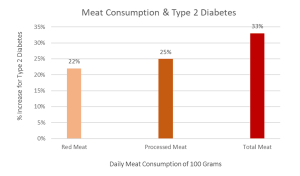
A recent Diabetes and Metabolism meta-analysis reported on the findings of almost 30 articles focused on the link between meat consumption and the risk for type 2 diabetes. The results were frightening: consuming red meat, processed meat, fish, and poultry can increase the risk for type 2 diabetes.


People who consumed the:

  • most total meat saw a 33% increased risk of type 2 diabetes
  • most processed meat saw a 25% increased risk for type 2 diabetes
  • most red meat 22% increased risk for type 2 diabetes


The deck is stacked against you.

Further analyses explored how adding meat to your diet increases risk. For example, adding 100 grams (a piece of meat approximately the size of a deck of cards) per day of total meat increases risk by 36%. Adding 100 grams of red meat increases risk by 31%. If you go one step further and add an additional 50 grams per day of processed meat, you increase your risk for diabetes by a generous 46%.

Why so high?

The authors attribute the associated risk to a list of diet “no-nos’”: saturated fat, dietary cholesterol, heme iron, and animal protein from meat. Serum levels of proteins and iron, plus increased weight associated with meat consumption, may also contribute to the risk.

Keep risk low.

A diet rich in fresh, high-quality fruits and vegetables both lowers the risk for type 2 diabetes and gives your body a necessary boost. Consuming natural, nitrate-rich foods can reduce blood pressure and improve overall circulatory health. Choose vegetables with naturally high nitrate content, rather than those with nitrate manufacturers have added during processing.

We can help.

At NutriFusion, we use first-grade, fresh and high-quality fruits and vegetables to create a nutrient dense powder full of natural vitamins and minerals. High quality food and beverage processors are adding the nutrient dense powder to their products to provide the nutrition bodies need.

We believe in a farm-to-table approach. But, even when you don’t have access to quality fruits and vegetables, you can achieve the necessary nutrition via our quality supplements. Our ingredients are plant based and never include synthetics, just real food from nature to you.

Inspired by Physicians Committee for Responsible Medicine www.pcrm.org

https://nf.simplygrandproperties.com/wp-content/uploads/2020/05/Grilling-Steak-2-1.jpg 422 729 NF Admin https://nf.simplygrandproperties.com/wp-content/uploads/2022/05/NutriFusion-Logo-New-1030x251.png NF Admin2020-06-02 17:15:592020-06-02 17:15:59Meat Consumption and the Link to Type 2 Diabetes

The Right Diet Can Promote Better Health and Reduces Costs

in Health & Nutrition

Consumers of All Generations Are Loving Plant-Based Foods

These days, there are so many kinds of diseases that wreak havoc on the health of many individuals. Diseases such as cardiovascular diseases, obesity, diabetes, and kidney diseases are affecting a lot of people. Eating the wrong kinds of foods is the biggest driver of illness in the United States. In fact, two-thirds of Americans are considered obese. Unfortunately, the traditional health-care system has never done enough to solve the ballooning problem. Conventional treatments of these diseases usually include taking in medicine. But while conventional medicine may help, many healthcare professionals are now trying other cost-effective approaches: food & lifestyle.

The Right Diet Can Create Better Health

Creating the right diet for patients has been shown to improve health outcomes. A program in Massachusetts designed a way to support the nutritional needs of low-income patients suffering from heart failure by providing healthy foods to reduce the risk of kidney diseases or diabetes. The organization called Community Servings provides 10 ready-to-eat meals to the homes of patients. All meals are tailored to fit the medical needs of the patients. All meals are created by registered dietitians.

This particular program was studied, and results showed that those who received medically tailored meals have 50% fewer hospitalizations as well as 72% fewer admissions in nursing facilities. The program resulted in a 16% reduction in terms of health-care costs. With the success of the program, Community Servings was able to cater to 2,300 patients. 

More People and Organizations Embracing the Movement

Putting together the right tailored meals can be a complex thing to arrange according to Seth A. Berkowitz, lead author of the study. The meals cooked by Community Servings can greatly help patients to get the right nutrition that they need. Another program similar to Community Servings was established in Pennsylvania that caters to diabetic patients. The patients receive nutritious foods weekly with the goal to reduce their HbA1c levels – a diabetes marker.

While the two initiatives were successful among the low-income earners, the effects are not clear for the more affluent patients. Nevertheless, the results of the study are eye-catching for everyone. Many lawmakers are now adapting the program. Recently, California launched a 3-year project worth $6 million to improve the nutrition of the Medicaid recipients of the state particularly among patients who suffered from heart failure.

In New York, low-income patients suffering from high blood pressure can join the program called Pharmacy to Farm wherein they can get their medicines at select pharmacies as well as buy produce from accredited farmers all over the city with promised rebates.

The thing is that local efforts to bring healthier foods to the people can help improve health not only for sick people but for everyone. Hippocrates once mentioned to his patients to “let food be thy medicine” and we are recently embracing this movement to help curb the health crises in the country. Letting food be their medicine is a more sustainable means of battling diseases.

Inspired by www.washingtonpost.com/health

https://nf.simplygrandproperties.com/wp-content/uploads/2018/05/bowl-with-buckwheat-and-salad-of-chickpea-B6DRXLG-min.jpg 1030 1545 NF Admin https://nf.simplygrandproperties.com/wp-content/uploads/2022/05/NutriFusion-Logo-New-1030x251.png NF Admin2020-04-30 08:25:402020-04-30 08:25:40The Right Diet Can Promote Better Health and Reduces Costs

Infographic: Sports Nutrition for Vegans

in Health & Nutrition

People are turning to vegan diets for a variety of reasons, including health, love of animals and concern for the environment. The ever-lengthening list of vegans now includes many athletes and many more who are simply physically active and want to stay that way.

Vegan athletes have an even harder time maintaining a nutritious diet than the average vegan. Athletes expend a great deal of energy, and demand more from their muscles, bones, nervous system and circulatory system. Dietary deficiencies limit athletic performance and can lead to potentially serious health issues.

Conventional wisdom (not so wise, really) says that athletes, especially endurance athletes, need meat and animal-based foods to support their nutritional needs. But this is not really the case. Vegan athletes may have to look a little harder and become better educated than the average person about nutritional science, but the options are out there for most of the nutrients their bodies need. And in the few cases where they are not, supplements and fortified foods are easily found.

The infographic below, Sports Nutrition for Vegans, provides a list of dietary options for getting the essential nutrients to support and sustain an athletic lifestyle. The nutrients listed in the infographic are easy to obtain from meat and animal-based foods, but less easy to find in plant-based foods. The good news is, the vegan options are tasty, plentiful, and in many cases budget-friendly. If you’d like to add variety to your diet while maintaining or improving nutrition, read on.

Author Bio: Renee Reynolds is Chief Financial Officer of Bactolac Pharmaceutical, a leading dietary supplement manufacturing company. Reynolds, who has 13 years of experience in the industry, currently focuses on delivering the most exceptional products and services to customers.

Sports Nutrition fo Vegans

https://nf.simplygrandproperties.com/wp-content/uploads/2020/04/Sports-Nutrition-For-Vegans.png 377 721 NF Admin https://nf.simplygrandproperties.com/wp-content/uploads/2022/05/NutriFusion-Logo-New-1030x251.png NF Admin2020-04-30 08:15:172020-04-30 08:15:17Infographic: Sports Nutrition for Vegans

Vitamin Deficiencies Are Affecting Our Mental Health

in Health & Nutrition

Proper nutrition can help promote better health. Health and wellness are not only translated as optimal physical health but also sound mental health. Sound mental health can be achieved if the body is provided with the right amounts of vitamins. It is also crucial for the body to absorb the vitamins, minerals, and other essential molecules that are necessary as building blocks for the brain.

New York-based psychiatrist, Dr. Jennifer Kraker, noted that nutritional deficiencies could lead to imbalanced biochemistry that can eventually affect mental health. While some people can address the nutritional deficiency by eating the right kinds of foods, others may need the help of doctors to prescribe them with the right combination of supplements. Now it is vital to take note that supplementation does not mean just getting a pill of supplements. Different individuals are unique; therefore, they require different kinds of nutrients.

Nutritional deficiencies are linked to mental health problems. Varying deficiencies can result in mild to disruptive symptoms of psychological issues. Severe nutritional deficiencies can cause anxiety, depression, obsessive-compulsive disorder, and bipolar disorder. Licensed psychologist, Nicole Beurkens, noted that mild nutritional deficiencies can still reduce the ability of individuals to manage stress, lower mood, and cause poor concentration as well as focus. While nutrients are essential to the mental health of individuals, some nutrients have already been proven to play the most critical role in achieving optimal mental health.

Vitamin D

Vitamin D is a fat-soluble vitamin that can help regulate the mood as well as give better sleep. It has also been shown to protect and promote the synthesis of neurons. Vitamin D regulates genes that make feel-good chemicals such as oxytocin and serotonin. Studies have shown that deficiency of Vitamin D results in depression, anxiety, fatigue, and irritability.

Vitamin B

Vitamin B12 and B6 are essential in maintaining good mental health. Both B12 and B6 keeps the levels of homocysteine in check. It is also vital in regulating mood chemicals such as dopamine and serotonin. Deficiencies of B vitamins include brain fog, fatigue, tingling, numbness, and shortness of breath.

Magnesium

Magnesium can help the body regulate stress. It is considered as a mood stabilizer.

Although it is uncommon for people to experience Magnesium deficiency, those who do may experience nausea, fatigue, loss of appetite, and mood changes.

Zinc

Zinc is vital for the brain to function correctly as it helps the body make chemicals like dopamine and serotonin. The deficiency of this nutrient is often higher among breastfeeding or pregnant women, vegetarians, and people suffering from gastrointestinal problems.

Omega-3 Fatty Acid

The omega-3 fatty acid is comprised of DHA and EPA that play essential roles in the proper functioning of the brain. It can prevent inflammation and improve communication between neurons. Lack of Omega-3 fatty acids can cause mood issues, allergies, fatigue, and dry skin.

So how do you know if you have deficiencies? Physical signs can give you a clue about what is happening to your body. These include constipation, headaches, diarrhea, bloating, weak nails, dry skin, hair loss, and others.

Inspired by www.huffpost.com

https://nf.simplygrandproperties.com/wp-content/uploads/2022/05/NutriFusion-Logo-New-1030x251.png 0 0 NF Admin https://nf.simplygrandproperties.com/wp-content/uploads/2022/05/NutriFusion-Logo-New-1030x251.png NF Admin2020-03-24 09:52:492020-03-24 09:52:49Vitamin Deficiencies Are Affecting Our Mental Health

Combat Stress with 7 Vitamins & Supplements

in Health & Nutrition

Stress is something that seems to be embedded permanently in modern lifestyles, especially with our current state of COVID-19. Stress is developed along with the effort of getting a job, holding a job, making money, and the like. Relationship and health issues add to the strain.

As people grow older, the presence of acute stress in their lives usually becomes chronic. The common causes of stress will generate tension, exhaustion, upset stomachs, nervous problems, headaches, anger, and irritability. Aside from having enough sleep, daily exercise, and a proper diet, supplementary vitamins, and nutrients can help in fighting these symptoms.

7 Stress-Fighting Supplements or Vitamins 

  1. Glycine

Glycine helps in creating your proteins. Research tags glycine in encouraging your body to rest with its calming influence on the nerves and its capacity to lower body temperature for good sleep and promotes alertness and focus. Those who take it are encouraged to eat before taking their nightly dose.

  1. L-theanine 

An amino acid found in tea can reduce stress by helping the body relax. This is called L-theanine, which has a sedative effect, according to studies.

Researchers also point to the combined effect of L-theanine and caffeine for best results, each ingredient having less effect when taken alone.

  1. Rhodiola Rosea 

Rhodiola, which has the scientific name Rhodiola Rosea, is found in Asian or Russian mountain regions. This adaptogen is commonly in these areas. It helps to stimulate your body to respond well to stress with better resistance.

Non-toxic and natural, its active ingredients are salidroside and rosavin. Studies show the herb to have had positive effects linked to those taking it to address chronic fatigue syndrome, sleeping problems, and impaired concentration and memory.

  1. Ashwagandha

India has its share of therapeutic herbs, and these include ashwagandha, known in science as Withania somnifera, and in Ayurveda as a healing herb. Experts have found this herb to be powerful in helping the body have the resilience to mental or physical stress.

  1. Melatonin 

There is a hormone linked to stress reduction and promotion of quality sleep. Melatonin is a hormone naturally produced by the body that has been found to promote sleep. Studies show people with primary disorders like insomnia had increased sleep quality by taking small doses of the hormone.

  1. Kava

Piper methysticum, more commonly known as kava, comes from a South Pacific evergreen shrub. Its active compounds are known as kavalactones, and they’ve been studied for their capacity to reduce stress and relieve anxiety.

More research is being conducted on kava since it may cause liver damage. However, if you want safe products, buy those that have been approved by organizations such as Underwriters Laboratories and NSF International.

  1. Vitamin B Complex

Metabolism is a need when you eat food. This food converts well into energy with good digestive habits and supplements that include B complex vitamins that contain the complete eight vitamins. B vitamins are closely linked to combating stress as well as reducing the risk of dementia, certain cancers, and heart disease. We include the essential B vitamins in our GrandFusion fruit and vegetable powders because of all the health benefits associated with them.

Your Wellness

When dealing with fatigue and chronic stress, it would be best to start addressing it by consulting expert medical professionals. The items enumerated here are well known to these, and you should ask them before using any of the supplementary items. Some cannot be taken for persons with certain diseases or conditions.

Inspired by www.ecowatch.com

https://nf.simplygrandproperties.com/wp-content/uploads/2022/05/NutriFusion-Logo-New-1030x251.png 0 0 NF Admin https://nf.simplygrandproperties.com/wp-content/uploads/2022/05/NutriFusion-Logo-New-1030x251.png NF Admin2020-03-19 08:45:162020-03-19 08:45:16Combat Stress with 7 Vitamins & Supplements

The Top 5 Nutrients That Vegan Athletes Need

in Health & Nutrition

Being a high-level athlete and a vegan is not an impossible feat. It can be done. Vegan athletes are very attentive to their nutrition, which gives them an edge when it comes to fueling their bodies for optimum performance. Here are the essential 5 nutrients for vegan athletes.

Omega-3 Fatty Acids

Algae, avocado, flaxseed, and walnuts are good vegan sources for omega-3 rich foods. This nutrient will boost your mood, stabilize your mood, and even achieve optimum cognitive function. It also helps fight inflammation, which is key to decreasing recovery time after an intense training session. Omega-3 fatty acids also boost the efficacy of your recovery between training.

Zinc

Zinc is an essential mineral that plays a role in boosting the body’s defense system or immunity. Vegan athletes and athletes, in general, are at risk of getting sick when taking off from training. To prevent this, adding zinc to your top 5 nutrient list is a must.

In fact, according to scientific journals, adequate zinc consumption is needed to eliminate stress and enhances tissue repair after heavy training. Good sources of zinc for vegan athletes are soy, whole grains, seeds, nuts, lentils, and beans. Not only are beans and lentils rich in zinc, but it is also a good source of iron.

Iron

Iron is the reason why our blood is red. And it is the iron contained in these red blood cells that enable it to carry oxygen and deliver to each cell in the body. Deficiency in iron can cause fatigue and will require extra work from a vegan athlete which becomes a vicious cycle. So, to perform well, a vegan athlete needs to make sure that they eat iron-rich foods that are vegan approved. This list would include swiss chard, tomatoes, seeds, nuts, grains, and legumes.

Vitamin D3

Vitamin D can be naturally stimulated through adequate sun exposure. Vitamin D2 and vitamin D3 can be sourced from plants. Vitamin D, as a whole, plays a role in bone building. Therefore, adequate amounts of this vitamin in the diet is needed to support healthy bones and muscles if you want to take your game to the next level. For vegans, vitamin D2 and D3 sources can come from cereals, non-dairy milk, fortified orange juice, and mushrooms.

Vitamin B12

Also known as cobalamin, Vitamin B12 promotes optimum nerve, blood, and brain function. For a vegan athlete, this vitamin is essential because any interruption in the transmission of nervous signals can mean muscular function reduction. Thus, a deficiency of this vitamin is equated to lessened power and strength performance. An excellent vegan source for vitamin B12 is nutritional yeast and methylcobalamin.

Inspired by www.bustle.com

https://nf.simplygrandproperties.com/wp-content/uploads/2022/05/NutriFusion-Logo-New-1030x251.png 0 0 NF Admin https://nf.simplygrandproperties.com/wp-content/uploads/2022/05/NutriFusion-Logo-New-1030x251.png NF Admin2020-02-05 08:19:242020-02-05 08:19:24The Top 5 Nutrients That Vegan Athletes Need

The In-Depth Look at Natural vs. Synthetic Vitamins

in Health & Nutrition

We eat whole foods, not just because we are hungry. It is our body’s way of letting us know that we need substance to keep our body functioning naturally. However, food choices and our fast-paced lifestyle have led to lower nutrition food with high calories, prompting us to rely on vitamin supplements. Below is a breakdown of the most essential vitamins and the differences between natural vs. synthetic forms

Vitamin A – naturally occurring in orange to red-colored foods like carrots. In its natural form, it is known as beta carotene. Its synthetic form is known as beta-ionone, retinyl acetate, and/or retinyl palmitate. The synthetic form primarily comes from palm oil—a leading cause of deforestation.

Vitamin B1 – also known as thiamine, vitamin B1 is found in green, leafy plants. Its synthetic counterpart is made from hydrochloric acid, acetone, ammonia, and coal tar to form thiamine hydrochloride or thiamine mononitrate. This is crystalline in form and may accumulate in our joints, which may lead to health issues.

Vitamin B2 – whole grains, almonds, eggs, and green leafy veggies are rich in riboflavin or vitamin B2. Its synthetic counterpart does not stay in our bloodstream for long periods, unlike its natural counterpart, and is quickly expelled akin to a toxic substance.

Vitamin C – found in citrus fruits. It naturally co-occurs with phytonutrients and flavonoids, while the synthetic ones do not, which makes it less useful than its natural counterpart.

Vitamin E – its most effective form can be gotten from the oils of seeds and grains. Its synthetic form does not stay long in our body and is expelled out of the system speedily, unlike natural vitamin E.

Vitamin K – found in green leafy vegetables. Coal tar derivatives are used to create the synthetic form, which is highly toxic and can negatively affect immunity.

Vitamin B6 – can be naturally sourced from bananas, broccoli, and spinach, to name a few. It is also known as pyridoxine, which plays a considerable role in normal body functioning. It is also known as the most toxic water-soluble vitamin, which can cause nerve damage.

Vitamin D – is naturally stimulated with sun exposure. Synthetic sources come from waxy secretions of animals and animal fat.

Vitamin B12 – also referred to as cobalamin B12 it can be found in seaweed and algae and also produced by bacteria in our tummy. The synthetic source comes from fermented cyanide and cobalt to create cyanocobalamin. Cyanide is a toxic chemical.

Vitamin B9 – also called folate, whole grains and leafy veggies are rich in this nutrient. Folic acid is its crystalline and synthetic form, which is not readily absorbed by the body.

Vitamin B6 – plants are a good source of pyridoxine or vitamin B6. In its synthetic form, it is produced from formaldehyde, HCL acid, and petroleum ester, which are not easily converted to its usable form.

Vitamin B5 – cereal grains, milk, eggs, and veggies are rich in pantothenate or vitamin B5. Formaldehyde and isobutyraldehyde are used to make pantothenic acid, which is the crystalline synthetic form of vitamin B5.

The common thing with synthetic vitamins is that they are sourced from chemicals that we know to be unpalatable and even toxic. There alone lies the BIG difference between these two. Do you want to be served a tablespoon of crystal-aldehyde or a bowl of veggies?

https://nf.simplygrandproperties.com/wp-content/uploads/2022/05/NutriFusion-Logo-New-1030x251.png 0 0 NF Admin https://nf.simplygrandproperties.com/wp-content/uploads/2022/05/NutriFusion-Logo-New-1030x251.png NF Admin2020-01-29 13:55:012020-01-29 13:55:01The In-Depth Look at Natural vs. Synthetic Vitamins
Page 28 of 52«‹2627282930›»

NUTRIFUSION®

GrandFusion® is a blend of fruits and/or vegetables that can significantly increase the nutritional profile and, therefore, the marketability of food, beverage, pet, and snack products.

Categories

  • Animal Nutrition
  • Beverages & Drinks
  • Consumer Packaged Goods
  • Corporate Partnerships
  • Corporate Updates
  • Featured
  • Food Business
  • Food Retail
  • Health & Nutrition
  • Infographics
  • Kid's Health
  • News
  • Press Releases
  • Product Announcements
  • Recipes
  • Supplements & Nutraceuticals
  • Uncategorized

ABOUT NUTRIFUSION®

NutriFusion® provides the nutrient-rich benefits of fruits and vegetables in everyday food products through whole non-GMO foods to create its concentrated micronutrient and phytonutrient-rich food ingredient blends.

Search NutriFusion

Search Search

Archives

  • June 2026
  • May 2026
  • April 2026
  • February 2026
  • January 2026
  • December 2025
  • November 2025
  • October 2025
  • September 2025
  • August 2025
  • July 2025
  • June 2025
  • May 2025
  • April 2025
  • March 2025
  • February 2025
  • January 2025
  • December 2024
  • November 2024
  • October 2024
  • September 2024
  • August 2024
  • June 2024
  • May 2024
  • April 2024
  • March 2024
  • February 2024
  • January 2024
  • December 2023
  • November 2023
  • October 2023
  • September 2023
  • August 2023
  • July 2023
  • June 2023
  • May 2023
  • April 2023
  • March 2023
  • February 2023
  • January 2023
  • December 2022
  • November 2022
  • October 2022
  • September 2022
  • August 2022
  • July 2022
  • June 2022
  • May 2022
  • April 2022
  • March 2022
  • February 2022
  • January 2022
  • December 2021
  • November 2021
  • October 2021
  • September 2021
  • August 2021
  • July 2021
  • June 2021
  • April 2021
  • March 2021
  • February 2021
  • January 2021
  • December 2020
  • November 2020
  • October 2020
  • August 2020
  • June 2020
  • April 2020
  • March 2020
  • February 2020
  • January 2020
  • December 2019
  • November 2019
  • October 2019
  • September 2019
  • August 2019
  • July 2019
  • June 2019
  • May 2019
  • April 2019
  • March 2019
  • February 2019
  • January 2019
  • December 2018
  • November 2018
  • October 2018
  • September 2018
  • August 2018
  • July 2018
  • June 2018
  • May 2018
  • April 2018
  • March 2018
  • February 2018
  • January 2018
  • December 2017
  • November 2017
  • October 2017
  • September 2017
  • August 2017
  • July 2017
  • June 2017
  • May 2017
  • April 2017
  • March 2017
  • February 2017
  • January 2017
  • December 2016
  • November 2016
  • October 2016
  • September 2016
  • August 2016
  • July 2016
  • June 2016
  • May 2016
  • April 2016
  • March 2016
  • February 2016
  • January 2016
  • December 2015
  • November 2015
  • July 2015
  • March 2015
  • February 2015
  • January 2015

Categories

  • Animal Nutrition
  • Beverages & Drinks
  • Consumer Packaged Goods
  • Corporate Partnerships
  • Corporate Updates
  • Featured
  • Food Business
  • Food Retail
  • Health & Nutrition
  • Infographics
  • Kid's Health
  • News
  • Press Releases
  • Product Announcements
  • Recipes
  • Supplements & Nutraceuticals
  • Uncategorized

Pages

  • 12 Nutrient Fruit & Vegetable Blend | NF-2782
  • 2024 Tradeshows
  • 21 Vitamin & Mineral Blend | NF-82333
  • 6 Nutrient Fruit & Vegetable Blend | NF-2769
  • 6 Nutrient Fruit Blend | NF-2771
  • 6 Nutrient Vegetable Blend | NF-2770
  • About Us
  • Active Research
  • B Complex Vitamin Blend | NF-2131
  • Beverages & Drinks
  • Blog
  • Certifications
  • Clients
  • Connect with NutriFusion
  • Contact Us
  • Custom Superfood Powder Blends
  • EY US Unveils William Grand of NutriFusion as an Entrepreneur Of The Year® 2025 Florida Award Finalist
  • FAQ
  • Food
  • Hidden Benefits
  • Home
  • How Fruit & Vegetable Intake Affects Cardiovascular Health
  • Media Kit
  • Newsroom
  • Nutraceuticals
  • NutriFusion Announces Partnership with BeLoved Foods
  • NutriFusion Announces Partnership with Drink Todo
  • NutriFusion Announces Partnership with Jam Packd, Creator of Delicious, Nutritious Fruit Spreads
  • NutriFusion Announces Supplier Partnership with UMMY Kids Superfood Shakes
  • NutriFusion Honored as Bronze Stevie® Award Winner in 2025 American Business Awards®
  • NutriFusion Partners with Whole Dogg to Launch Canada’s First Veterinary Nutritionist formulated Dog Supplement
  • NutriFusion Ranks No. 3436 on the 2025 Inc. 5000 List of America’s Fastest-Growing Private Companies
  • NutriFusion Ranks No. 4441 on the 2024 Inc. 5000
  • NutriFusion Welcomes Nutrition Expert Michelle Bacarella, MS RDN, to Drive Innovation in Whole Food Nutrition Solutions
  • NutriFusion- nutrients created by nature
  • Pet Fruit & Vegetable Blends
  • Podcasts
  • Press
  • Privacy Policy
  • Privacy Tools
  • Products
  • Research & Development
  • Secure Website
  • Supplements & Nutraceuticals
  • SupplySide West
  • Test Page 2
  • Testimonials
  • The Essential Guide to Creating Functional Foods & Beverages
  • Vitamin Deficiency: What to Know
  • Vitamins for Baby Boomer & Seniors
  • Vitamins for Beverages
  • Vitamins for Frozen Foods
  • Vitamins for Healthy Snacks
  • Vitamins for Millennials
  • Vitamins for Pets
  • Vitamins for Private Label
  • Vitamins for Weight Management
  • Website Updates | Maintenance

Categories

  • Animal Nutrition
  • Beverages & Drinks
  • Consumer Packaged Goods
  • Corporate Partnerships
  • Corporate Updates
  • Featured
  • Food Business
  • Food Retail
  • Health & Nutrition
  • Infographics
  • Kid's Health
  • News
  • Press Releases
  • Product Announcements
  • Recipes
  • Supplements & Nutraceuticals
  • Uncategorized
Scroll to top Scroll to top Scroll to top